
Trump Says “We Will Run The Country” After Venezuela Strike Remarks
Trump declares strong leadership after Venezuela strike remarks, fueling debate over presidential power and U.S. foreign policy.
Former U.S. President Donald Trump made forceful remarks about leadership and power, saying “we are going to run the country,” in comments delivered following reports of a U.S.-linked strike involving Venezuela. The statement has drawn sharp attention both domestically and internationally, reigniting debate over foreign policy, executive authority, and America’s global role.
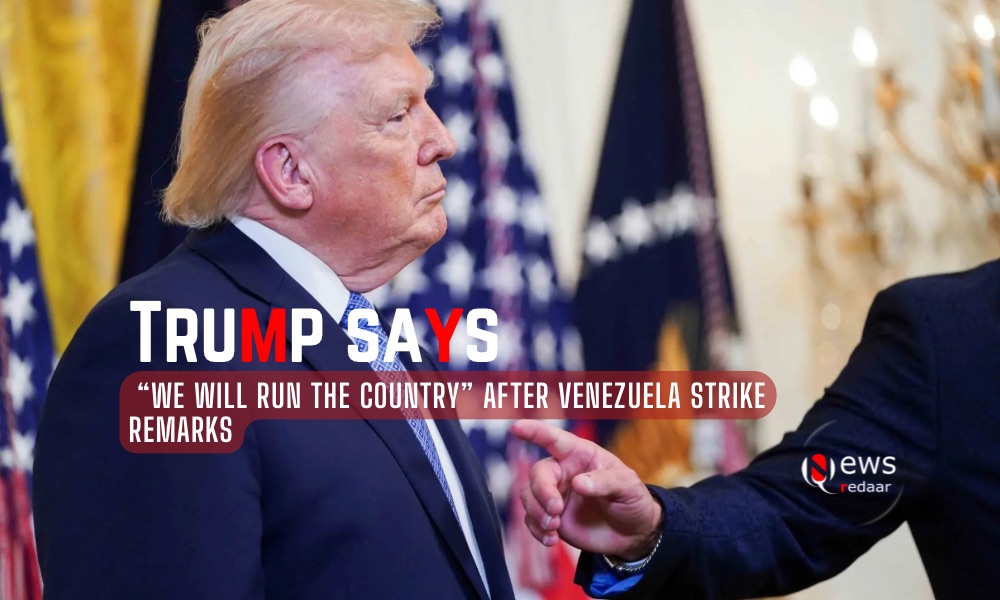
Speaking to supporters, Trump framed the moment as a demonstration of strength, arguing that decisive action abroad reflects strong leadership at home. While details surrounding the reported strike remain limited and under scrutiny, Trump’s comments were widely interpreted as a political message aimed at reinforcing his image as a leader willing to act aggressively on the world stage.
The remarks come at a time of heightened geopolitical sensitivity in Latin America, where Venezuela remains at the center of economic instability, political tension, and international sanctions. Any military action or perceived involvement by the United States in the region carries significant diplomatic consequences, analysts say.
Trump did not provide operational details, but his statement focused on authority and control. “We are going to run the country,” he said, emphasizing what he described as firm governance and national strength. Supporters praised the remarks as a signal of confidence and resolve, while critics argued that the language risked escalating tensions and undermining diplomatic norms.
Foreign policy experts noted that such rhetoric can resonate strongly with domestic audiences but may alarm international partners. “Words matter,” said one analyst. “Statements following military developments can influence markets, alliances, and public perception even before facts are fully confirmed.”
The Biden administration has not directly responded to Trump’s remarks, though officials reiterated that current U.S. foreign policy decisions are guided by diplomatic channels, international law, and coordination with allies. Meanwhile, lawmakers from both parties called for clarity and transparency regarding any military actions connected to Venezuela.
Trump’s comments also reflect the broader political climate as the United States approaches another election cycle. National security, presidential authority, and America’s role abroad are expected to be central campaign issues. Trump has repeatedly positioned himself as a strong leader capable of restoring what he calls “order and respect” on the global stage.
In Venezuela, government-linked media criticized what they described as threatening rhetoric from U.S. political figures, while regional observers urged restraint. Latin American leaders have historically opposed external military involvement in the region, warning it could destabilize already fragile economies.
As questions remain about the strike itself, Trump’s remarks have already achieved political impact, dominating headlines and sparking debate across social media and cable news. Whether the comments will influence policy or remain part of campaign rhetoric remains to be seen.
What is clear is that Trump’s statement has once again placed presidential power, foreign intervention, and political messaging at the center of national conversation.